

While we’re living in the era of SaaS e-commerce solutions, Magento Open Source may seem somewhat of a geeky option for those who are ready to spend hours on manual coding because they just like it. Or for those who don’t have the money to afford an SaaS license. Or for some, let’s say, “old believers”, who don’t trust ready-made code of SaaS options and prefer doing everything on their own. Well, the reality turns out to be different.
Today, Magento Open Source is experiencing a resurgence, and the reasons for this are not only about its obvious flexibility and power but also due to recent strategic developments in the open-source ecosystem. One of the most notable changes is the increasing trend of large e-commerce players making their products open-source for community development, just as Hyvä theme recently did.
So, what does this mean for the future of Magento Open Source, and how can businesses capitalize on it? We’ll try to figure it out in this article.
The Rise of Magento Open Source: A Shifting Trend
Magento Open Source began as a flexible, customizable e-commerce solution for developers and businesses that wanted complete control over their online store. Over the years, however, many e-commerce players turned to SaaS solutions, such as Adobe Commerce (actually licensed Magento), Shopware, and BigCommerce, because they offered a more straightforward and less technical approach to building online stores.
But now, Magento Open Source seems to be making a comeback. Many large e-commerce players are moving toward open-source models, contributing to the ecosystem and expanding its capabilities. For example, the Hyvä theme, which was initially a paid option, is now open-source, offering a more modern and optimized front-end for Magento stores. This gives Magento Open Source a huge performance boost and makes it a more attractive solution for businesses that want to leverage the platform’s flexibility without sacrificing user experience or performance.
This shift is important because it reflects a broader trend in the e-commerce domain, where businesses are increasingly looking for more control over their platform, features, and the overall user experience. Open-source software enables companies to make these adjustments without the limitations imposed by proprietary systems, and Magento Open Source is perfectly positioned to meet this demand.
What is Magento Open Source?
Magento Open Source is a free, customizable e-commerce platform that allows businesses to build online stores with complete control over the backend and frontend. Unlike proprietary SaaS solutions, Magento Open Source gives merchants the ability to tailor their stores to their specific needs, offering unlimited customization options, a vast library of extensions, and complete ownership over their data and infrastructure.
It’s important to note that Magento Open Source is not a "one-size-fits-all" solution. While it offers exceptional flexibility, it does come with its own set of challenges, primarily technical expertise and ongoing maintenance requirements. Unlike fully managed SaaS platforms, businesses using Magento Open Source must be prepared to manage their own hosting, security, and technical issues. However, this trade-off is worth it for many businesses that require extensive customization or have complex operational needs.
Who Is the Client of Magento Open Source?
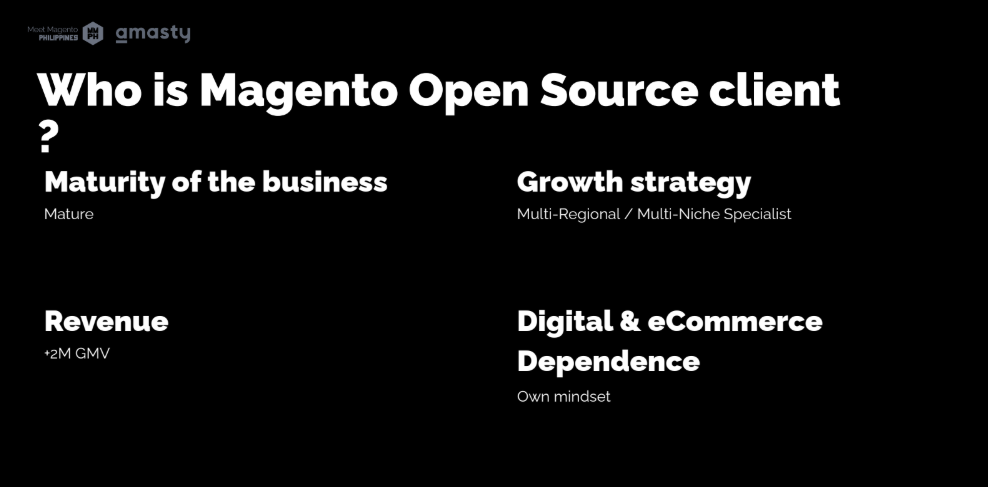
Despite the common misconception that Magento Open Source is only used by geeky startups who are on a budget, the reality is a bit different. Magento Open Source is best suited for mature businesses, not startups. And here’s why.
Why Magento Open Source Isn't Ideal for Startups
Magento Open Source requires significant development resources, ongoing hosting costs, and technical expertise. For startups, the high initial investment, both in time and money, might outweigh the benefits. Startups often need a faster, easier-to-implement solution with fewer upfront costs and less technical complexity. Platforms like Wix, Squarespace, or Shopify are often better suited for early-stage businesses because they offer simpler, more intuitive solutions with lower initial costs.
Who Should Use Magento Open Source?
Magento Open Source is ideal for medium to large businesses that have already established their business processes and need a flexible platform for future expansion. These businesses typically have:
Mature business processes: Magento Open Source is not for those starting from scratch, but rather for businesses with clear operational workflows.
A substantial product catalog: If you have a large product catalog or complex data models (e.g., 10,000 – 100,000 SKUs), Magento Open Source is a great fit.
A multichannel strategy: Magento Open Source can handle multiple sales channels, stores, and languages, which is beneficial for businesses looking to expand internationally.
Advantages of Magento Open Source
1. Cost-Effectiveness
While Magento Open Source doesn’t come with the licensing fees of platforms like Adobe Commerce, it still offers many of the same features. This way, even together with the cost of various Magento extensions, total cost of ownership (TCO) is two times lower than with the SaaS option.
2. Flexibility and Customization
Magento Open Source is highly flexible, allowing businesses to customize the platform to meet their specific needs. From integrating third-party systems to adjusting the storefront design, e-commerce businesses have complete control over the platform.
3. Scalability
Magento Open Source can handle large inventories and high traffic volumes. As businesses grow, they can scale their Magento stores without needing to switch platforms. Its open-source nature ensures that businesses can keep improving and optimizing the platform as needed.
4. Large Community and Ecosystem
Magento Open Source benefits from a robust ecosystem of developers, agencies, and extension providers. This means that businesses can tap into a wide range of resources, tools, and third-party solutions to extend the platform’s functionality.
Challenges of Magento Open Source
It would be unfair to say that Magento Open Source is flawless – nothing is. With many benefits it offers, Magento Open Source implies several challenges:
1. Technical Complexity
Magento Open Source is a complex platform that requires a skilled development team to implement and maintain. Businesses without in-house technical expertise may struggle with the platform’s steep learning curve and may need to hire external agencies or developers. This is actually the reason why this platform is not the best choice for small startups – they simply have different priorities to invest resources in.
2. Ongoing Maintenance
Magento Open Source requires businesses to handle their own hosting, security, and performance optimization. This can be time-consuming and costly if businesses lack the necessary technical resources.
3. Performance Optimization
Magento Open Source out-of-the-box can be slower compared to SaaS solutions. Hosting, server configurations, front-end theme choices, and third-party extensions help the platform's performance. Besides, SaaS solutions most often require third-party modules for better performance, too; otherwise, there wouldn’t be so many extension vendors offering hundreds of solutions for different platforms.
Where Magento Open Source Wins Over SaaS Solutions
Magento Open Source offers several advantages over SaaS platforms like Shopify and BigCommerce:
1. Full Control Over Customization
With Magento Open Source, businesses have complete control over the design, functionality, and features of their stores. SaaS platforms are more rigid in terms of customization, limiting businesses to predefined templates and functionalities.
2. Scalability
Magento Open Source can scale with your business. Whether you’re adding new products, handling increased traffic, or expanding into new regions, Magento Open Source provides the infrastructure and flexibility needed to grow.
3. Cost-Effective for Large-Scale Operations
While SaaS platforms charge ongoing subscription fees, Magento Open Source allows businesses to invest in a more flexible, scalable solution without recurring licensing costs.
When to Choose SaaS Solutions Over Magento Open Source
While Magento Open Source offers flexibility, there are scenarios where Adobe Commerce (SaaS) is the better option:
Limited Technical Resources. If your team lacks the expertise to manage hosting, security, and updates, Adobe Commerce offers a fully managed solution, reducing the burden on your team. Magento Open Source requires more technical involvement, including managing hosting and security.
Enterprise-Level Support. Adobe Commerce provides 24/7 premium support and troubleshooting assistance, making it ideal for businesses that need quick resolution for complex issues. Magento Open Source relies on community support, which may not be as immediate or comprehensive.
Need for Built-In Compliance and Security. For businesses with stringent compliance or security requirements (such as PCI-DSS, GDPR, or industry-specific regulations), Adobe Commerce offers built-in features and tools for compliance and enhanced security. Magento Open Source, on the other hand, requires manual configuration and third-party solutions for security and compliance management.
Successful Magento Open Source Case Studies
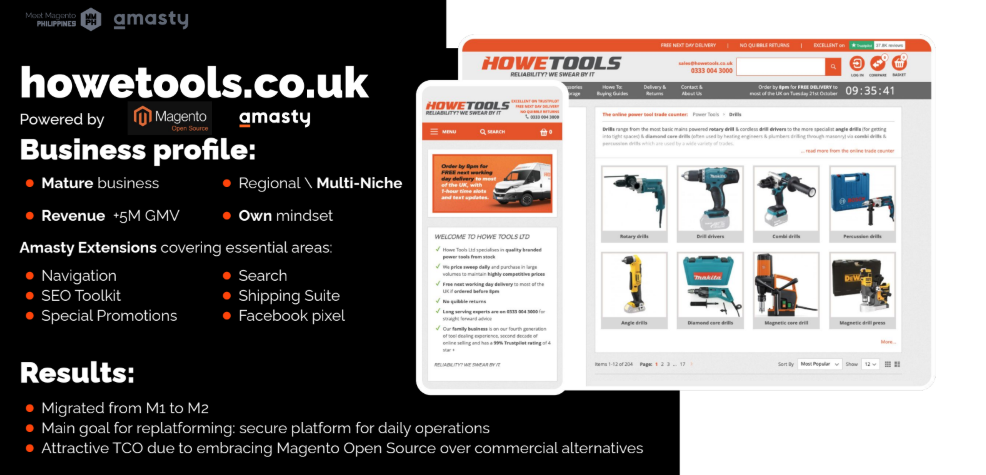
Several businesses have successfully implemented Magento Open Source to build large-scale, feature-rich e-commerce sites. One example is howetools.co.uk, a business with annual revenues exceeding $5 million. By migrating from Magento 1 to Magento 2 and integrating Amasty extensions for navigation, SEO, and shipping, they were able to optimize their site’s performance, increase customer account creation rates, and expand their operations. This highlights the flexibility and scalability of Magento Open Source, which allowed the business to improve its operations while keeping costs down.
Best Practices for Working with Magento Open Source
To succeed with Magento Open Source, businesses should follow these best practices:
Choose the Right Hosting Provider: Hosting is crucial to Magento Open Source’s performance. Select a hosting provider that can meet the platform’s technical demands.
Optimize for Performance: Use solutions like the Hyvä theme for faster page loads and ensure that your site is optimized for speed.
Invest in Security and Compliance: Regularly update your Magento store and make sure it meets industry regulations, especially accessibility and data privacy laws.
Leverage the Magento Ecosystem: Take advantage of Magento’s large community, including third-party extensions and developer support, to build a tailored solution.
The Future of Magento Open Source
While we are not prophets to predict any future at all, we can still make assumptions based on what’s happening in the e-commerce industry. And, judging by what we see these days, Magento Open Source, as well as open-source solutions in general, is experiencing a resurgence. Hyvä theme became open-source, many businesses start choosing open-source versions of platforms like Shopware and Magento over SaaS solutions like Shopify, and the community is developing actively in general.
Why? Businesses do value flexibility, scalability, and control over their e-commerce ecosystems.
Looking forward, Magento Open Source will continue to be one of the top players in the open-source e-commerce space, as the community continues to grow and contribute to the platform’s development.